- Home Page /
- Patio, Lawn & Garden /
- Generators & Portable Power /
- Solar & Wind Power /
- Energy Controllers /
- Solar Charge Controller, 150A 100A 60A 50A 30...
0 ratings




Item #:
143512692
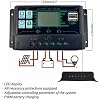
Solar Charge Controller, 150A 100A 60A 50A 30A 20A 10A MPPT PWM Solar Char Controller 12V 24V LCD Display 2 USB Port Solar Panel Battery
Item #:
143512692
FJD 93
Price Details
Excluding Shipping & Custom charges ( Shipping and custom charges will be calculated on checkout )
*All items will import from US
In stock
 Imported from USA store
QTY:
Order now and get it around Thursday, July 23
Secured transaction
Ubuy works hard to protect your security and privacy. Our advanced payment security system ensures confidentiality by encrypting your information during transmission using AES (Advanced Encryption Standards) and SSL (Secure Socket Layer) protocols. Your payment details are 100% secure as we do not share your payment details with third party sellers.
Our Top Logistics Partners


Experience high charging efficiency and complete protection with our advanced LCD Solar Controller.

Fast
Shipping

Free
Return*

Secure Packaging

100% Original Products

PCI DSS Compliance

ISO 27001 Certified


Note: Step Down Voltage Transformer required for using electronics products of US store (110-120). Recommended power converters Buy Now.


What Stands Out
High Current Capacity
Designed to handle up to 150A, this solar charge controller efficiently regulates energy from solar panels, ensuring optimal battery charging and longevity, making it suitable for large solar installations.
MPPT and PWM Modes
Offers both MPPT and PWM charging modes, providing flexibility to maximize energy harvest from solar panels, catering to a variety of user needs and enhancing overall system efficiency.
User-Friendly Display
Equipped with an LCD display, this charge controller provides real-time monitoring of battery status and charging parameters, allowing users to easily check performance and make informed decisions for their solar system.
Product Details
- MPPT+PWM Coexist Function: The solar char controller will automatically adapt to the adjustment charging mode (MPPT/PWM), and automatically adjust the charging according to the type of battery.
- LCD Display: The solar char controller features the lar-screen LCD display, char and dischar current display, cumulative power neration and dischar power query, temperature display, light control + delay control
- Multiple Functions: The solar char controller features is equipped with all necessary protection devices, the control paeters of the system are adjustable, easy to set up and operate.
- Built-in short circuit protection, open circuit protection, reverse connection protection, and overload protection. Reverse current protection, low heat neration, self-recovery function
- adjustable char and dischar paeters, with functions such as power-off memory.
| Brand Name | KGKGK |
| Manufacturer | KGKGK |
| Part Number | 1005004215225831 |
| Model | 1005004215225831 |
| Unit Count | 1.0 Count |
| Voltage | 24 Volts (DC) |
| Display Type | LCD |
| Color | A |
| Material Type | Acrylonitrile Butadiene Styrene (ABS) |
| Item Weight | 500 Grams |
| Brand | KGKGK |
| Material | Acrylonitrile Butadiene Styrene (ABS) |
Dangerous Goods
To avoid the delay in customs clearance process for Dangerous Goods, the shipment shall be opened at our warehouse facility to check the severity of hazardous components. Please see the list of Dangerous goods here.
Who Should Buy?

-
DIY Solar Enthusiasts
Ideal for hobbyists who want an efficient way to manage solar panel energy systems.
-
Off-Grid Living
Perfect for users relying on solar power for their homes or cabins not connected to the grid.
-
High Capacity Needs
Great for users with large power requirements needing robust regulation for diverse solar panel setups.

-
Small Scale Users
Not suitable for those with minimal energy requirements, as features may be excessive for their needs.
-
Non-Solar Systems
Users without solar panels will find this product incompatible and unnecessary for their energy solutions.
-
Beginners
May overwhelm inexperienced users due to its advanced features and settings without prior knowledge of solar systems.
Product Description
Have any Query? Chat with us
Customer Questions & Answers
-
Question:
What is a solar charge controller and what does it do?
Answer: A solar charge controller regulates the voltage and current coming from your solar panels to your batteries. It prevents overcharging and deep discharging, which can damage batteries. By efficiently managing battery charging, it extends battery lifespan and optimizes power utilization. For instance, using a Solar Charge Controller for your home solar system ensures that energy storage is balanced, particularly during fluctuating weather conditions. -
Question:
What are the benefits of using MPPT vs PWM solar charge controllers?
Answer: MPPT (Maximum Power Point Tracking) solar charge controllers are more efficient than PWM (Pulse Width Modulation) controllers. MPPT can capture more energy from solar panels by adjusting the electrical operating point. This is especially beneficial in situations where light conditions are variable. For example, if you're in a location with partial shade, an MPPT controller can significantly increase the amount of energy stored compared to a PWM controller. -
Question:
What size solar charge controller do I need for my solar system?
Answer: The size of the solar charge controller depends on your solar panel output and battery capacity. Controllers such as 10A, 20A, 30A, etc., correspond to the maximum current they can handle. To determine the appropriate size, calculate your solar panel wattage divided by your system voltage. For example, if you have a 300W solar panel with a 12V system, a 30A charge controller would be suitable to prevent overload. -
Question:
Can I use a solar charge controller for both 12V and 24V systems?
Answer: Yes, many solar charge controllers are designed to handle both 12V and 24V systems. This flexibility allows users to adapt the controller to various solar setups. Ensure that you select a controller model that specifically states compatibility with both voltage levels. Such versatility is particularly useful for those who might expand their solar systems in the future. -
Question:
How do I connect my solar charge controller to the battery and panels?
Answer: Connecting a solar charge controller involves wiring the solar panels to the solar input terminals of the controller and the battery to the battery terminals. Always follow the manufacturer's instructions for terminal connections to ensure safety. For example, make sure to connect the battery first, then the solar panels, which prevents back-feeding voltage and potential damage. -
Question:
What features should I look for in a solar charge controller?
Answer: Key features include MPPT or PWM technology, LCD display, USB ports for charging devices, temperature compensation, and multiple charge settings. An LCD display offers real-time monitoring of system status, while USB ports enable convenient device charging. These features enhance usability and provide better control over your solar power system. -
Question:
Is it necessary to use a solar charge controller with my solar system?
Answer: Yes, it is necessary to use a solar charge controller to manage voltage and current effectively. Without it, batteries could become overcharged, leading to a risk of battery failure or explosion. Using a charge controller like those available in various amperage ratings ensures that your solar energy system operates safely and efficiently. -
Question:
How do I troubleshoot my solar charge controller?
Answer: Common issues with solar charge controllers can include display errors, lack of charging, or overly rapid discharge of batteries. Start by checking all connections for security and correctness. Refer to the user manual for specific troubleshooting steps based on observed symptoms. If problems persist, understanding the various error codes displayed can help pinpoint the issue to resolve it effectively. -
Question:
What types of batteries are compatible with solar charge controllers?
Answer: Most solar charge controllers are compatible with various battery types, including lead-acid (AGM, gel) and lithium-ion batteries. It’s essential to choose a controller that matches the battery type, as each requires different charging profiles. For example, if using lithium batteries, ensure the charge controller supports lithium charging specifications to optimize performance and longevity. -
Question:
Where can I buy a Solar Charge Controller?
Answer: You can buy a Solar Charge Controller like the MPPT PWM models in various amperages at Ubuy. They provide an extensive selection and enable a seamless shopping experience based on your needs. Ubuy is recognized for its reliable product offerings, making it convenient and straightforward to find the right solar charge controller for your solar panel system.
KGKGK Energy Controllers Editorial Review
No editorial reviews found
Customer Reviews & Ratings
1 customers ratings
-
5 Star
0%
-
4 Star
0%
-
3 Star
100%
-
2 Star
0%
-
1 Star
0%
Review this product
Share your thoughts with other customers
Pros
- Efficient power regulation
- LCD display for easy monitoring
- Multiple amperage options
- 2 USB ports for devices
- Compatible with 12V and 24V systems
Cons
- Setup instructions could be clearer.
Product Price History
Important information
- Limitations : For products shipped internationally, please note that any manufacturer warranty may not be valid; manufacturer service options may not be available; product manuals, instructions, and safety warnings may not be in destination country languages; the products (and accompanying materials) may not be designed in accordance with destination country standards, specifications, and labeling requirements; and the products may not conform to destination country voltage and other electrical standards (requiring use of an adapter or converter if appropriate). The recipient is responsible for assuring that the product can be lawfully imported to the destination country. When ordering from Ubuy or its affiliates, the recipient is the importer of record and must comply with all laws and regulations of the destination country.
- Not all the products listed on Ubuy are for sale, as Ubuy is a global search engine. Products are subject to export/trade regulations.
FJD 93
Order now and get it around Thursday, July 23
This item is not restrict in my country.(Please click on above link if this item is not restrict in your country, So our team will review and allow.)
QTY:
Secured transaction
Ubuy works hard to protect your security and privacy. Our advanced payment security system ensures confidentiality by encrypting your information during transmission using AES (Advanced Encryption Standards) and SSL (Secure Socket Layer) protocols. Your payment details are 100% secure as we do not share your payment details with third party sellers.
Our Top Logistics Partners
Fastest cross-border delivery
Features & Benefits
- Real-time display of temperature, charging current, and discharge current.
- Current auto MPPT tracking for optimal charging efficiency.
- Dual MOS tube circuit for enhanced anti-backflow protection.
- Multiple protection features: overheating, overcurrent, and short circuit.
- Large LCD display for easy monitoring and adjustments.
- Adjustable charge/discharge parameters for user convenience.